
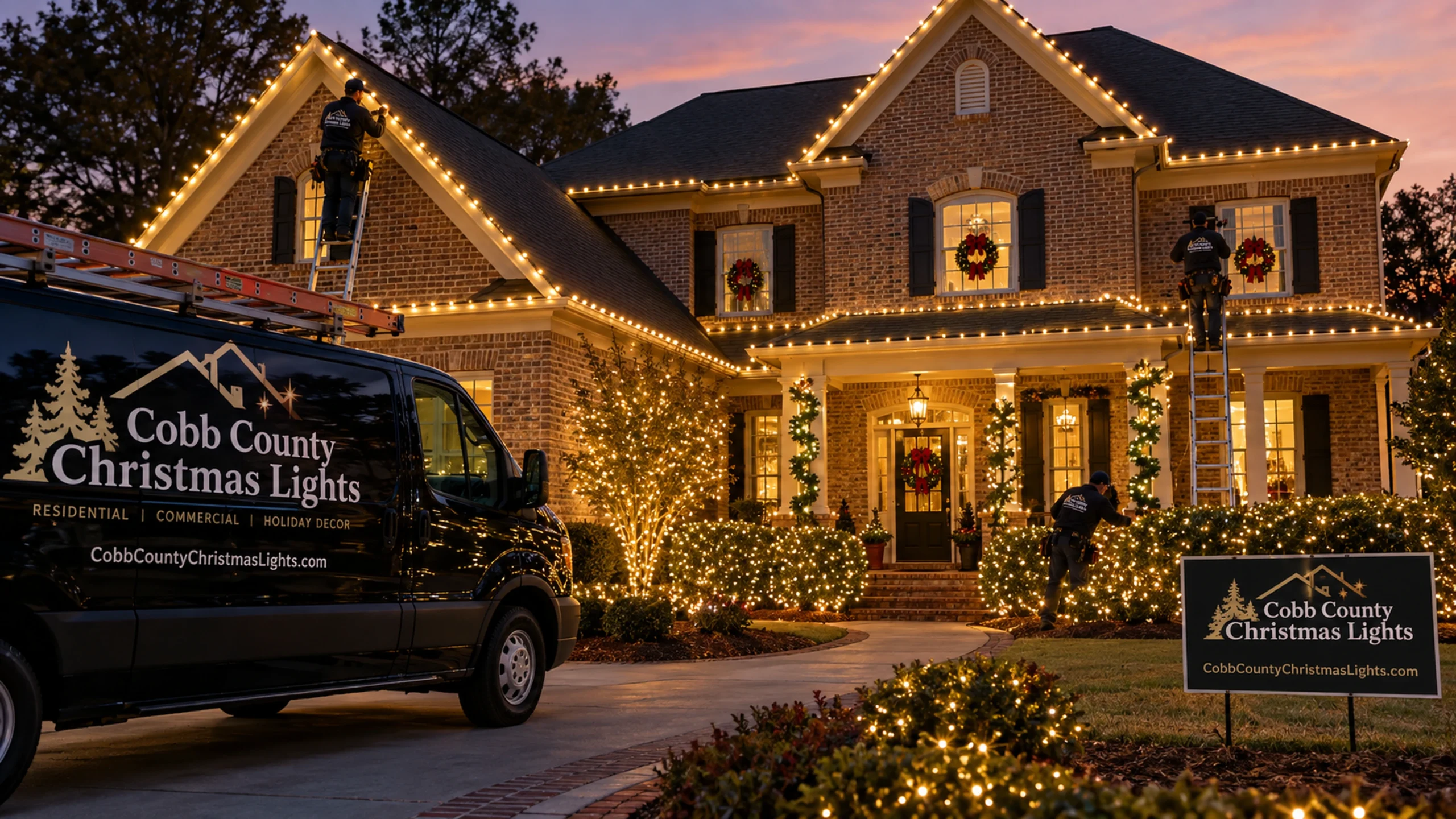
Before Installation
Start With the Property, Priorities, and Constraints
A strong Christmas light installation process starts before anyone climbs a ladder. The first step is understanding the property: which areas should be decorated, what the main viewing angles are, how people enter and move around the site, where power is available, and which surfaces or landscape areas affect access.
For a home, the priorities might be rooflines, peaks, columns, trees, pathways, or the front entry. For a business, the plan may also need to consider operating hours, customer traffic, parking, deliveries, shared spaces, property-management rules, and event schedules.
Photos are useful because they allow the design conversation to focus on specific areas instead of vague descriptions. The service address is equally important because availability and scheduling should be confirmed for the actual property.
Design & Scope
Turn the Holiday Idea Into an Installable Plan
The next step is to translate the preferred style into a clear project scope. That includes deciding which architectural lines should be emphasized, where secondary lighting belongs, whether trees or landscaping should be included, and how color and brightness should work together.
The scope should also distinguish essential elements from optional additions. That makes it easier to evaluate pricing and prevents the design from becoming a collection of unrelated ideas. Use the holiday lighting design guide for a deeper design framework.
Primary Lines
Rooflines, peaks, storefront edges, or other major architectural elements establish the visual structure.
Secondary Features
Trees, pathways, shrubs, columns, entries, and selected landscape zones add depth and context.
Operational Needs
Access, power, gates, parking, foot traffic, business hours, and removal timing affect how the plan can be executed.
Installation Day
Follow the Approved Scope in a Logical Sequence
- Confirm access and the work areas.Make sure the installation areas are reachable and that vehicles, gates, pets, deliveries, or customer activity are coordinated where relevant.
- Stage materials by area.Organize the materials for rooflines, trees, landscaping, entries, or commercial zones so the work does not rely on repeated repositioning.
- Install major lines first.Establish the main architectural or high-visibility elements before adding secondary accents.
- Review visual balance and function.Check how the display reads from the primary viewing areas and verify that normal access routes remain practical.
- Document the final scope.Keep a record of what was installed so maintenance and removal can refer back to the actual project.
Property and access considerations are covered in more detail in the installation safety and property-planning guide.
During the Season
Keep Maintenance Connected to the Original Installation
If a section of the display develops an issue and maintenance is part of the approved service, identify the affected area as specifically as possible. A photo and a short description can help distinguish a single section from a property-wide problem.
Keeping maintenance tied to the original installation scope also makes it easier to understand which materials, power area, or design section is involved.
After the Holidays
Removal and Storage Complete the Workflow
Post-holiday removal should be planned rather than treated as an afterthought. The takedown sequence should consider the same access areas used during installation, along with weather and current property conditions.
If storage is part of the approved service, organized packing can support future identification and planning. Visit Christmas light removal and storage planning for the post-season details.